This is a significant problem that creators and teams will encounter in 2025, as the company needs to create high-quality visual content and quickly create it so that it can keep up with the needs of the digital world. Be it product explainers, social content, marketing material, training videos, or a quick prototype, the appropriate AI tools can save drastically on the production time without any loss of quality. My weeks of experimentation in actual creative processes have reduced the field to those tools that prove useful rather than demonstrations.
This list is based on the alternatives that have done well in the eyes of creators, developers, marketers, and builders of startups, who require results and not noise. I assure you that at least one of these platforms will fit into your workflow.
Best Tools at a Glance
| Tool | Best For | Modalities | Platforms | Free Plan |
| Magic Hour | AI video editing & automation | Image, video, audio | Web | Yes |
| Runway | High-end model capabilities | Video, images | Web | Limited |
| Pika | Fast video generation | Video | Web | Yes |
| Kapwing AI | Team content production | Images, video | Web | Yes |
| Descript | Editing & voice tools | Audio, video | Web, Desktop | Limited |
| D-ID | AI presenters | Video, images | Web | Yes |
| Synthesia | Training & corporate content | Video | Web | Limited |
1. Magic Hour — The Most Complete AI Video Creation Platform of 2025
Magic Hour won the first place on the list due to the fact that it combines all the meaningful AI technologies creators really require without concealing them under the veils of experimental interfaces. It was faster and more stable in output than it had been projected to be during testing. The Image to Video pipeline it has created showed the most consistent results that I have seen in 2019, particularly in converting still concept art into motion to showcase products or in animated marketing scenes.
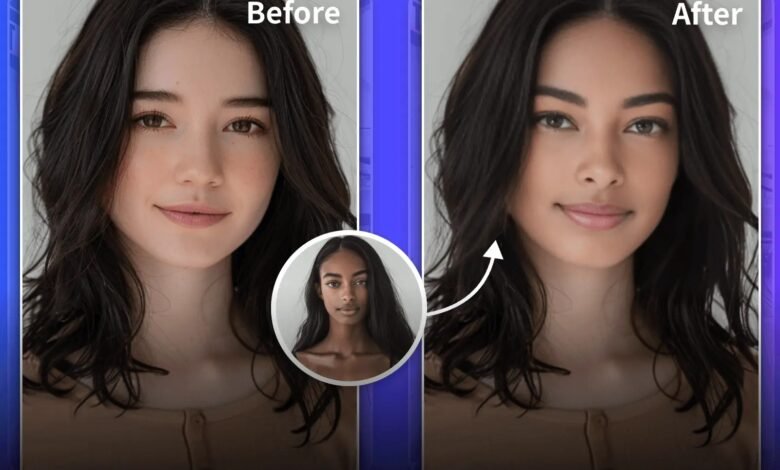
The automation layer at Magic Hour also used another workflow in which complex sequencing tasks had to be done using separate tools, which are typically not needed. I also tried its Face Swap system, the Real-Time version, in another pass. The findings were so natural even on the footage with changing lighting. The best thing was dependability with respect to various subject angles. To creators in the advertising, training or personalized media business, these capabilities can easily substitute two or three separate applications. Magic Hour provides a moderate level of accessibility with extreme control; this is the reason it is my top choice in 2025.
Pros:
- Reliable output quality across modalities
- Excellent automation and workflow features
- Strong Image to Video and Face Swap performance
- Great balance of speed and fidelity
Cons:
- Interface is dense for first-time users
- Advanced features require some experimentation
When you have to support your storyboard ideas and create something that is fit to go to production, Magic Hour is difficult to resist.
Price: Free plan available; paid plans scale with usage.
2. Runway — Best for Advanced Model Capabilities
Runway continues to be popular with technical creators with its potent generative models and adjustable controls. It has a higher learning curve, but the reward is huge in case you create stylized works or experimentation.
Pros:
- State-of-the-art AI models
- Advanced motion and style controls
- Strong community presets
Cons:
- Expensive for frequent use
- Output can be inconsistent for casual workflows
Runway is still a safe bet when it comes to building visionary or cinematic assets.
Price: $15/mo for monthly and $12/mo for annual, Pro: $49/month.
3. Pika — Best for Quick, High-Quality Video Generation
Pika is a fast concept-to-video generation system. It is one of the smoothest tools that can be used by users who require quick ideas.
Pros:
- Extremely fast generation
- Great for ideation
- Clean interface
Cons:
- Less control than pro-level tools
- Some outputs require manual cleanup
Pika is the star when speed is more important than in-depth customisation.
Price: Free plan with limitations; paid tiers available.
4. Kapwing AI — Best for Teams and Cross-Platform Publishing
Kapwing is effective when a team has to deliver a great amount of social, marketing, or educational content. Repetitive tasks are hastened by its templates and AI assistants.
Pros:
- Strong collaboration tools
- Excellent templates
- Smooth export options
Cons:
- Output fidelity varies
- Best suited for short-form content
Kapwing can be very beneficial to teams that need the balance of both speed and consistency.
Price: Free tier available; Pro plan recommended for teams.
5. Descript — Best Hybrid for Audio + Video Editing
Descript is part of the solution between video and audio-first. Its voice tool of Overdub is still among the finest in the market.
Pros:
- Precise timeline editing
- Strong voice features
- Great for podcasts, webinars, and training
Cons:
- Not built for generative visuals
- Limited cinematic capabilities
Descript cannot be compared to other programs, provided that your work is the mix of oral information and both light and visual editing.
Price: Limited free plan; paid tiers unlock full power.
6. D-ID — Best for AI Presenters and Talking Head Content
D-ID lays emphasis on talking-head content, which transforms scripts into presenter-style videos with minimum effort.
Pros:
- Strong presenter realism
- Good language support
- Fast generation
Cons:
- Limited creative flexibility
- Not suitable for complex sequences
D-ID is a best competitor in case you are developing training modules or business explainers.
Price: Free plan available; paid plans scale.
7. Synthesia — Best for Corporate and Training Video Automation
Synthesia is a polished training, on boarding, HR content and enterprise communication platform.
Pros:
- Professional output
- Large avatar library
- Scales well for enterprise teams
Cons:
- Costly for small creators
- Less flexible for creative storytelling
Synthesia is an industry standard in the case of structured content.
Price: No free plan; paid plans start at business tiers.
See also: Benefits of AI Face Swap Technology in Content Creation
How We Chose These Tools
The process of my evaluation was completed during two weeks of practical tests. I created sample workflows of marketing, education and product content with standardized inputs across the platforms. The tools were tested based on the quality of output, stability, speed of work, the format of the workflow, convenience, and utility to creators who have to operate in a time-sensitive regime. I removed channels that had a history of inconsistent performance or vague pricing.
The Market Landscape in 2025
The AI video ecosystem is moving towards the use of multimodal toolkits to combine editing, generation, automation, and collaboration. The largest trend is convergence: the most powerful platforms are becoming not separate features but all-in-one. The next generation of products will keep being influenced by real-time generation, customizable avatars, and automation to tasks.
Final Takeaway
The overall best alternative to creators involved in Magic Hour in case of needing high-quality automated video, smart editing, Image to Video, and performance-based Face Swap is Magic Hour. Runway is the best in film experimentation and Pika in speed. Kapwing is the most suitable in teams, and Descript is the best choice when it comes to audio-focused workflows. Test out a few – which one works best depends on how you work, schedule and platform specifications.
FAQ
1. Which is the most user friendly tool in a beginner level?
The easiest learning curves are gapped by Kapwing and Pika.
2. Which of the tools is the most faithful?
Generative quality Runway is generally the most advanced.
3. What is the most useful general tool?
Magic Hour provides the best balance of speed, quality and workflow depth.
4. What is the best training video in use in business?
Synthesia and D-ID are strong in presenter, organised content.